
Diamond Bracelet Designs: 5 Styles Compared
Tennis, Station, Chain, Bangle and Cuff Bracelets Explained • Published September 10, 2026
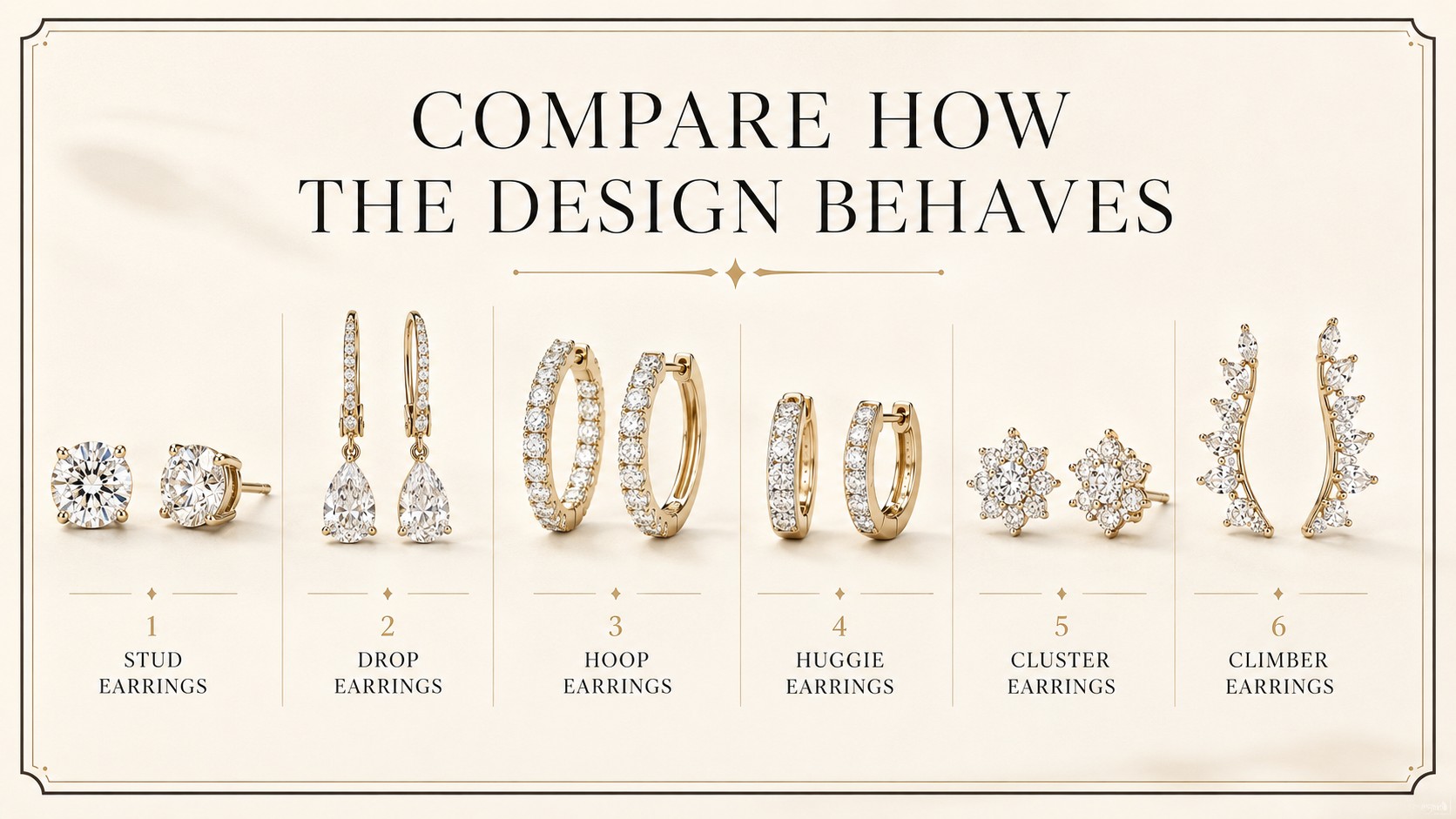
The best bracelet is the design whose movement, fit, fastening and visual scale suit the person wearing it — not simply the one with the most diamonds.
Diamond bracelets can look similar in close-up photography while behaving very differently on the wrist. A tennis bracelet is flexible and follows the wrist closely. A station bracelet usually places diamonds at intervals along a lighter chain. A chain bracelet makes the metal links a stronger part of the design. A bangle has a more fixed circular structure. A cuff is usually open at the back and sits around part of the wrist rather than forming a completely closed circle.
Those differences affect much more than appearance. They change how the bracelet moves, how precisely the fit needs to be chosen, how it fastens, how much diamond coverage it gives, how easy it is to stack with other jewellery and how noticeable it feels during everyday wear. The best bracelet is therefore not simply the one with the most diamonds or the highest total carat weight. It is the design whose movement, fit, fastening and visual scale suit the person wearing it.
Quick Comparison: Tennis vs Station vs Chain vs Bangle vs Cuff
Before looking at individual styles in detail, this comparison shows why bracelet type should be decided before diamond specification.
| Bracelet Type | Structure | Typical Movement | Fit Sensitivity | Fastening | Visual Emphasis |
|---|---|---|---|---|---|
| Tennis bracelet | Flexible line of individually set diamonds | High, follows the wrist | Moderate to high | Usually clasp-based | Continuous diamond coverage |
| Station bracelet | Diamonds spaced along a chain | High and fluid | Moderate | Usually chain clasp | Delicate, spaced sparkle |
| Chain bracelet | Metal links form the main structure | Moderate to high | Moderate | Usually clasp-based | Metal design + selected diamonds |
| Bangle | Closed or hinged rigid/semi-rigid form | Low | High | Slip-on or hinge/clasp | Clean, structured outline |
| Cuff | Open rigid or semi-rigid form | Low | High | Often open, sometimes hinged | Sculptural, architectural look |
There is no universally superior type. Each solves a different wearing problem.
Tennis Bracelets: Maximum Diamond Continuity and Wrist Movement
A tennis bracelet is built around a continuous line of individually set diamonds or gemstones connected in a flexible structure. GIA describes the classic tennis bracelet as a flexible band of individually set stones forming a continuous line around the wrist. That flexibility is one of its defining advantages. Rather than holding one rigid circular shape, the bracelet follows the wrist as the wearer moves. This can create a very natural feel when the sizing is correct, while also allowing the diamonds to remain visible around much of the wrist. The trade-off is that a tennis bracelet contains many individual stone settings and articulated connections. Quality therefore depends not only on the diamonds but also on the consistency of the settings, links and clasp.
Tennis Bracelet Strengths and Trade-Offs
| Factor | Tennis Bracelet |
|---|---|
| Diamond visibility | Usually high because stones continue around much or all of the wrist |
| Movement | Flexible and follows wrist movement |
| Fit | Should allow controlled movement without excessive sliding |
| Fastening | Usually a clasp; some designs add safety features |
| Stacking | Generally easy to combine with watches, bangles or other bracelets |
| Main consideration | Many stones and connections mean setting consistency and clasp security matter |
GIA recommends a tennis-bracelet fit that is comfortable and relatively close to the wrist while still allowing slight movement; its guide suggests that approximately one finger should fit between the bracelet and wrist rather than allowing the bracelet to slide excessively. That guidance is useful because a tennis bracelet that is too tight can feel restrictive, while one that is too loose may move further up and down the arm, turn repeatedly or catch more easily.
Station Bracelets: Lighter Diamond Coverage With More Visible Chain
A station bracelet distributes diamonds at intervals rather than creating one uninterrupted row. The spaces between diamonds become part of the design. That produces a lighter visual effect and usually places more emphasis on the chain itself. The diamonds may appear as isolated points of brilliance rather than a continuous surface. This style can work particularly well for someone who wants diamond jewellery that feels understated rather than heavily covered.
The important comparison with a tennis bracelet is not simply that the station bracelet has fewer stones. The two designs create fundamentally different visual rhythms. A tennis bracelet emphasises continuity. A station bracelet emphasises spacing.
Tennis Bracelet vs Station Bracelet
| Comparison | Tennis Bracelet | Station Bracelet |
|---|---|---|
| Diamond arrangement | Continuous or near-continuous | Diamonds spaced apart |
| Metal visibility | Usually lower | Usually higher |
| Visual weight | More diamond-dominant | Lighter and more delicate |
| Movement | Flexible through linked settings | Flexible through chain |
| Fit behaviour | Structured flexibility | More chain-like drape |
| Best for | Continuous diamond appearance | Subtle diamond accents |
A station bracelet may also move more like a necklace chain around the wrist because the connecting chain sections can be finer and more fluid. That makes bracelet length especially important. If the bracelet is too loose, the diamond stations may rotate underneath the wrist more frequently. If it is too tight, the chain may lose the fluidity that defines the design.
Chain Bracelets: When the Metal Links Are Part of the Main Design
A diamond chain bracelet places greater emphasis on the metal architecture. The bracelet may use: curb-style links, oval links, box-like links, decorative links, or another repeating chain structure. Diamonds can then be applied to selected links, a centre element, a clasp area or another part of the bracelet. The difference from a station bracelet is that the chain itself often becomes the principal visual element, rather than simply acting as a fine support between diamonds.
Tiffany, for example, separately categorises chain, bangle, tennis and cuff bracelets, reflecting how structurally different those bracelet types are rather than treating them as minor variations of one design.
Station Bracelet vs Diamond Chain Bracelet
| Comparison | Station Bracelet | Diamond Chain Bracelet |
|---|---|---|
| Primary visual feature | Individual diamond stations | Metal links |
| Diamond distribution | Spaced diamonds | Often selected links or focal sections |
| Metal presence | Usually subtle | Usually prominent |
| Movement | Fine and fluid | Depends on link size and structure |
| Style impression | Delicate | Can range from delicate to bold |
| Stacking behaviour | Usually low visual bulk | Can create stronger texture in a stack |
A chain bracelet can therefore be a stronger choice for someone who appreciates both precious metal and diamonds rather than wanting the diamonds to dominate every visible part of the bracelet.
Bangle Bracelets: More Structure, Less Free Movement
A bangle changes the wearing experience because its form is substantially more rigid. Instead of draping around the wrist like a chain or tennis bracelet, a bangle maintains a defined shape. Some bangles are completely closed and slide over the hand. Others use a hinge and fastening that allows the bracelet to open. That construction makes sizing especially important.
Tiffany's bracelet sizing guidance recommends a snugger fit for cuffs and bangles, while allowing more breathing room for link and chain bracelets because the latter need space to move. That distinction is exactly why bracelet style needs to be selected before assuming one wrist measurement works identically across every design.
Flexible Bracelet vs Bangle
| Factor | Tennis / Chain Bracelet | Bangle |
|---|---|---|
| Structure | Flexible | Rigid or semi-rigid |
| Movement around wrist | Higher | Lower |
| Shape retention | Follows wrist | Keeps defined form |
| Sizing priority | Wrist circumference + desired movement | Wrist/hand access + internal bangle dimensions |
| Fastening | Usually clasp-based | Slip-on or hinged |
| Stacking | Fluid | More structured |
A closed bangle also introduces another sizing issue: it may need to pass over the widest part of the hand. That is different from sizing a clasped chain bracelet purely around the wrist. A hinged bangle reduces that particular concern because it opens, but the internal circumference and shape still determine how it sits once closed.
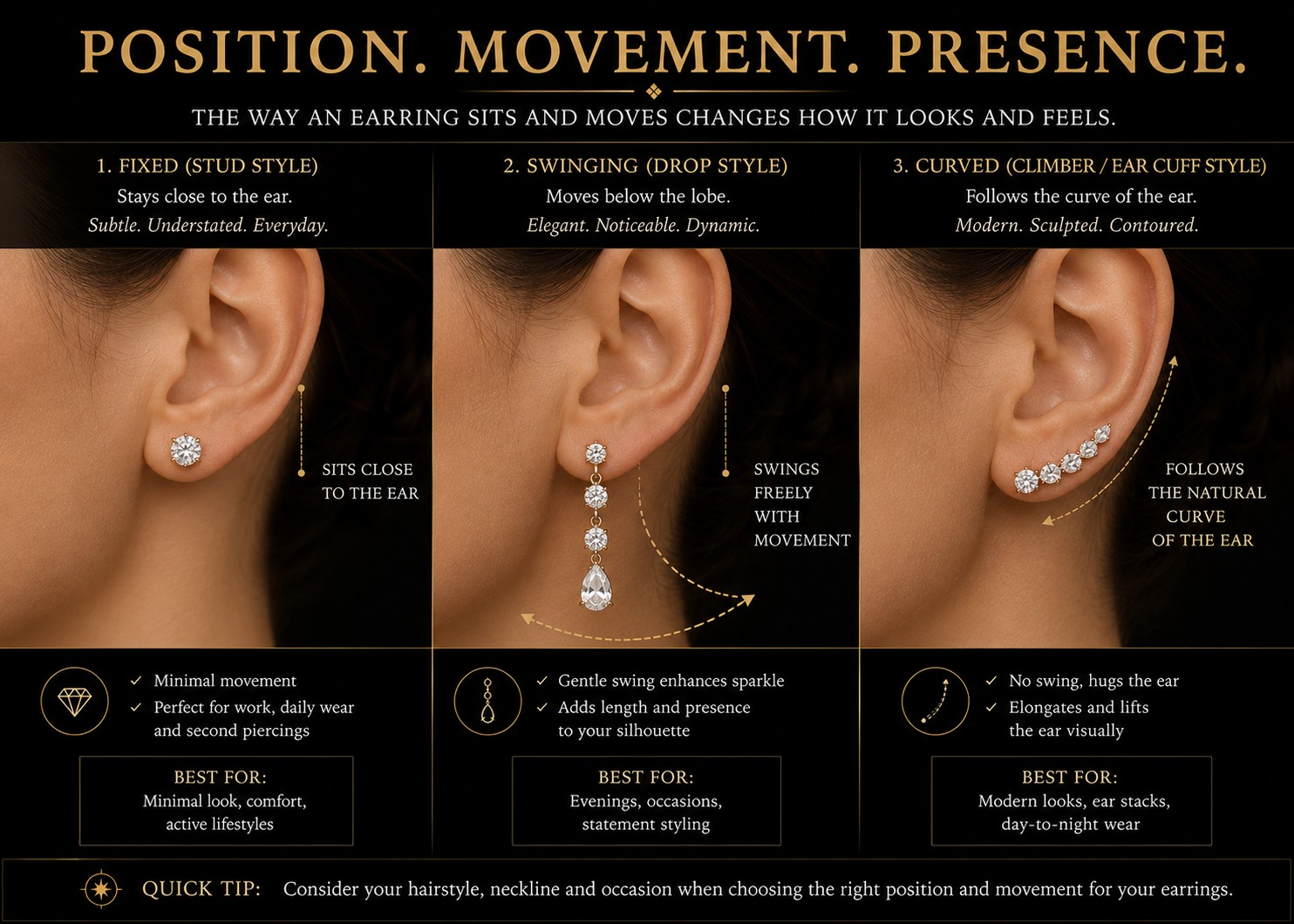
A cuff offers a sculptural, architectural appearance — but fit sensitivity is high and adjustability should never be assumed.
Cuff Bracelets: Open, Sculptural and Fit-Sensitive
A cuff is typically open rather than forming a fully closed circle. Tiffany describes cuffs as having an open back, in contrast with bangles that form a closed circle and usually slide over the hand. That structural difference changes both appearance and fit. A cuff often has a more sculptural quality because there is no visual need for a continuous chain or complete circular band. Diamonds may appear: across the front, at the two open ends, in a central motif, or across only part of the cuff. Because the form is relatively rigid, the bracelet does not flow around the wrist in the way a tennis bracelet does.
Bangle vs Cuff
| Comparison | Bangle | Cuff |
|---|---|---|
| Basic form | Closed circle or hinged closed form | Open form |
| Movement | Low | Low |
| How it goes on | Over hand or through hinge | Through open section or hinge |
| Fit tolerance | Depends heavily on internal dimensions | Can sometimes be somewhat more forgiving |
| Visual style | Continuous circular form | Open, sculptural form |
| Typical stacking effect | Clean repeated bands | Stronger architectural contrast |
An open cuff can sometimes allow a degree of adjustment, but that should not be interpreted as permission to repeatedly bend any cuff. Whether a specific design is intended to flex or be adjusted depends on its construction. Aurelia should not claim that any cuff is adjustable unless the product specification confirms it.
Which Bracelet Moves the Most?
Movement is one of the clearest distinctions between bracelet designs. A fine station bracelet can move very freely. A chain bracelet may also articulate substantially, although larger links can make the movement feel more substantial. A tennis bracelet bends at many small connections and follows the wrist closely. A bangle or cuff retains far more of its original form. This difference affects both comfort and appearance.
| Bracelet | Movement Level | What the Wearer Usually Notices |
|---|---|---|
| Station | High | Light, fluid motion |
| Chain | Moderate–high | Link movement and texture |
| Tennis | Moderate–high but controlled | Flexible line following wrist |
| Bangle | Low | Whole bracelet moves as one form |
| Cuff | Very low | Fixed sculptural placement |
Someone who dislikes jewellery moving up and down the wrist may prefer a closer-fitting bangle or cuff. Someone who enjoys fluid jewellery may prefer a station, chain or tennis style. Neither sensation is inherently better.
Which Bracelet Needs the Most Accurate Fit?
All bracelets need an appropriate fit, but the consequences of incorrect sizing differ. A chain bracelet that is slightly loose may simply hang lower. A tennis bracelet that is much too loose may rotate or catch more often. A bangle that is too small may not pass over the hand if it has no hinge. A cuff that does not suit the wrist shape may sit awkwardly regardless of its visual design.
This is why wrist circumference alone is not always enough. Cartier's current bracelet sizing tool instructs customers to measure around the wrist and explicitly notes that fit recommendations depend on the model. That is a useful general principle: measure the wrist first, then apply that measurement to the specific bracelet construction. Do not assume that one numerical bracelet length translates identically across tennis, chain, bangle and cuff designs.
Bracelet Length vs Wrist Circumference
These terms should not be confused. Wrist circumference is the body measurement. Bracelet length is the product measurement. A 17 cm wrist does not automatically require a 17 cm flexible bracelet because the wearer usually needs some additional space for movement and comfort. How much additional room is appropriate depends on the design and desired fit. Tiffany, for example, advises slightly looser sizing for link and chain bracelets than for bangles and cuffs. The dedicated measurement guide should own the exact sizing workflow. This article should explain why the sizing workflow changes by bracelet type.
Fastening Can Be as Important as the Bracelet Design
The clasp is sometimes treated as a minor technical detail. For bracelets, it directly affects usability. A clasp needs to be secure enough for the product while also being practical for the person wearing it. This is particularly important because a bracelet is usually fastened with one hand. A mechanism that looks sophisticated but is difficult for the wearer to operate may reduce how often the piece gets worn.
Tennis bracelets frequently use secure clasp systems, and GIA notes that safety latches are often used to provide additional security. Chain and station bracelets can use different clasp types. Hinged bangles may integrate their closure into the rigid form. Open cuffs may not require a traditional clasp at all.
| Bracelet | Common Structural Approach | Main Fastening Question |
|---|---|---|
| Tennis | Flexible linked settings | Is the clasp secure and easy to operate? |
| Station | Fine chain | Is the clasp proportionate and practical? |
| Chain | Linked structure | Does the clasp suit the bracelet's weight? |
| Bangle | Closed or hinged | Is there a hinge/closure, or must it pass over the hand? |
| Cuff | Open form | Is the opening designed for the wrist size? |
Do not infer a specific clasp on an Aurelia product from the bracelet category alone. The actual product specification should identify the closure where it matters.
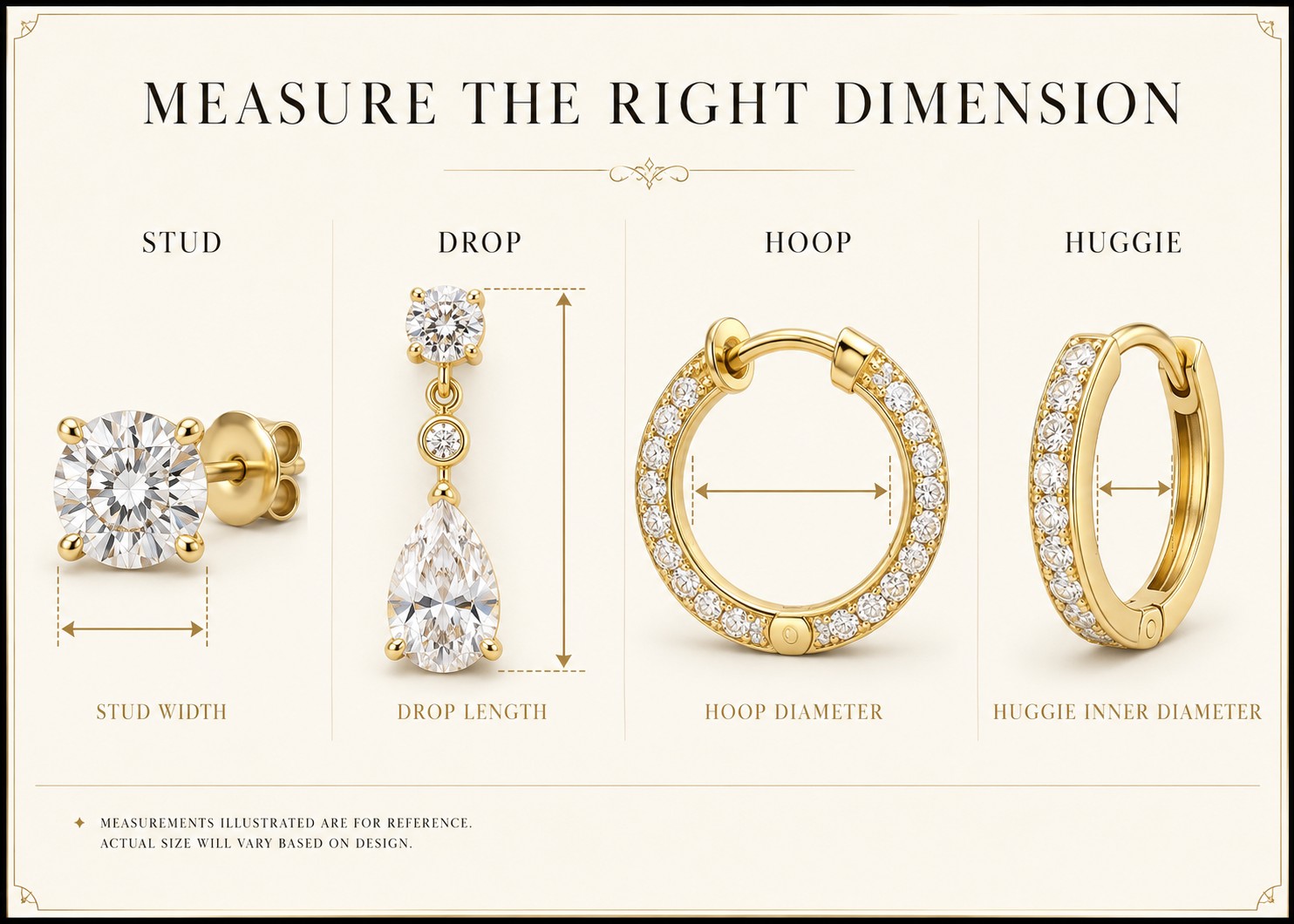
Total carat weight alone cannot tell you how diamonds are distributed — compare stone distribution, count and visible scale separately.
Which Bracelet Gives the Most Diamond Coverage?
If continuous diamond visibility is the priority, the tennis bracelet is usually the most obvious category. Its defining design places stones continuously or near-continuously around the wrist. GIA describes this continuous line as one of the characteristic features of the tennis bracelet. A station bracelet does the opposite. It deliberately leaves visible gaps between diamonds. A chain bracelet may use diamonds only on selected links. A bangle or cuff can range from one small diamond accent to extensive pavé coverage. Therefore, bracelet category does not tell you total diamond weight by itself. You still need the product specification.
| Style | Typical Diamond Distribution | Visual Result |
|---|---|---|
| Tennis | Continuous line | Maximum continuity |
| Station | Spaced stones | Airier sparkle |
| Chain | Selected links or focal motifs | Metal-forward design |
| Bangle | Partial or extensive coverage | Structured diamond surface |
| Cuff | Ends, centre or front-facing section | Sculptural diamond accents |
This is why total carat weight should not be used as the only comparison. A 3 ct tennis bracelet and a 3 ct cuff may distribute the same total diamond weight completely differently.
Compare Diamond Size and Diamond Count Separately
A higher total carat weight can come from: more diamonds, larger diamonds, or both. Imagine two fictional bracelets, each stated as 3.00 ct total diamond weight. One could use many small diamonds in a continuous tennis design. The other could place fewer larger stones across a rigid bangle. They would not look equivalent simply because TCW matches. Compare: individual visible stone size where relevant, stone count, diamond distribution, and: total carat weight.
For the detailed terminology, link to Total Carat Weight Meaning in Diamond Jewellery
Which Design Is Most Comfortable?
Comfort depends on both construction and individual preference. A fine chain can feel almost weightless but may move more. A correctly fitted tennis bracelet can follow the wrist comfortably while still having physical presence. A bangle avoids chain-like movement but may knock against nearby jewellery or a desk because it maintains a defined form. A cuff can feel stable but needs to suit the wearer's wrist geometry. There is no useful universal ranking such as: tennis is most comfortable or: cuff is least comfortable. The useful question is: What type of movement does the wearer prefer?
Which Bracelet Works Best for Everyday Wear?
Everyday suitability depends on the specific design, not just the category. A low-profile bezel-set tennis bracelet may behave differently from a larger prong-set tennis bracelet. A delicate station bracelet may suit someone who wants minimal visual weight. A robust chain bracelet may suit someone who wants the metal to form most of the design. A bangle can be convenient because it retains its shape, while a cuff can provide a strong look with relatively little movement. Rather than declaring one type the universal everyday winner, compare: fit, profile, stone setting, clasp, movement, and intended activities.
How Setting Style Changes a Tennis Bracelet
Even within one bracelet category, setting design matters. GIA identifies prong, bezel and channel settings among common tennis-bracelet constructions. Prongs expose more of the stone, bezels surround more of the diamond with metal, and channel settings place stones between metal walls. That means two tennis bracelets can share the same general category while feeling visually different.
| Setting | Visual Character | Metal Around Diamond | Surface Feel |
|---|---|---|---|
| Prong | Open, diamond-forward | Lower | More individual stone definition |
| Bezel | Clean, enclosed | Higher | Smoother protective outline |
| Channel | Continuous, streamlined | Metal rails visible | Flatter visual surface |
Setting choice can therefore affect both appearance and snagging behaviour. It should be treated as part of the bracelet design rather than merely a technical note.
Which Design Is Best for Stacking?
Bracelet stacking works partly through contrast. A flexible tennis bracelet next to a rigid bangle creates different movement and surface texture. A delicate station bracelet can create space between heavier pieces. A chain bracelet can introduce visible metal links. A cuff can become the visual anchor of a stack. Tiffany's own styling material specifically shows tennis, chain, bangle and cuff bracelets being combined to create contrasting textures and silhouettes.
The useful stacking question is not: Can these bracelet categories be worn together? They can. The better question is: Do their widths, movement and contact points work together comfortably? Two rigid bangles behave differently against each other from a fine chain placed beside a cuff.
Which Bracelet Is Best Next to a Watch?
This depends on the watch and the bracelet. A very loose bracelet can move repeatedly against a watch case. A rigid bangle may also contact the watch depending on wrist position. A narrower, controlled-fit bracelet may reduce movement between the pieces. If stacking beside a watch is part of the intended use, compare the bracelet's: width, fit, profile, and freedom of movement. Do not rely only on styled photographs.
Diamond Bracelet Width Matters
Width changes the entire appearance of a bracelet. A narrow tennis bracelet can look delicate even when diamonds continue around the wrist. A multi-row tennis design can look far more substantial. A broad cuff creates a very different impression from a narrow cuff even if both use limited diamond accents. Similarly, thick chain links can dominate a bracelet while fine links almost disappear. This makes width one of the most useful dimensions to compare after bracelet length.
Finished Bracelet Weight Also Changes the Wearing Experience
Finished weight can provide context about how substantial a bracelet may feel. But weight should not be used as a quality score. A lightweight station bracelet can be beautifully made. A heavier bangle can be substantial but still poorly finished. Use finished weight, where available, as one part of understanding the physical product.
For the broader distinction between dimensions and gram weight, link to How to Check Jewellery Dimensions and Weight Online
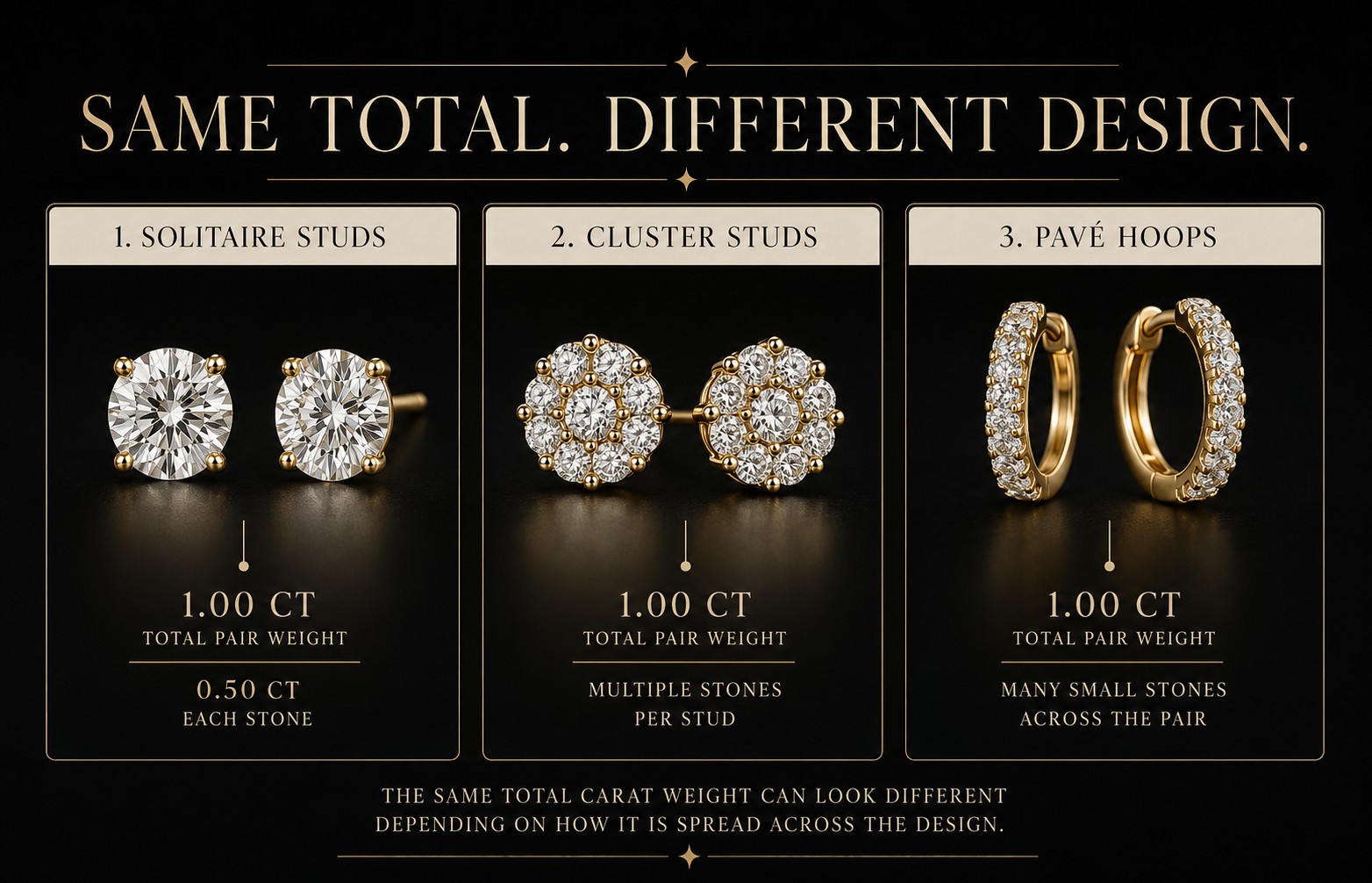
Match the design to the wearer's priorities — movement, diamond coverage, structure, stacking and everyday suitability all matter.
Tennis vs Station vs Chain vs Bangle vs Cuff: Which Should You Choose?
The decision becomes easier when the design is matched to the wearer's priorities rather than ranked from "best" to "worst".
| If You Prioritise... | Consider First | Why |
|---|---|---|
| Continuous diamond appearance | Tennis | Diamonds form the dominant visual line |
| Subtle everyday sparkle | Station | More negative space and lighter appearance |
| Strong metal design | Chain | Links become a central visual feature |
| Structured silhouette | Bangle | Maintains a defined circular form |
| Sculptural appearance | Cuff | Open, architectural construction |
| High fluidity | Station / chain | Chain structure moves freely |
| Controlled flexibility | Tennis | Articulated but more structured |
| Minimal wrist movement | Bangle / cuff | Rigid form limits drape |
| Easy texture contrast in stacking | Tennis / chain / bangle mix | Different structures create visual separation |
This table is a starting point, not a substitute for product-specific measurements.
A Fictional Comparison Example
Imagine five fictional lab-grown diamond bracelets. The following specifications are educational examples only and do not represent Aurelia products or current pricing.
| Fictional Bracelet | Structure | Diamond Distribution | Fit | Likely Wearing Character |
|---|---|---|---|---|
| A | Tennis | Continuous | Slight movement | Classic, diamond-forward |
| B | Station | Five spaced diamonds | Looser chain fit | Delicate and fluid |
| C | Chain | Diamonds on selected links | Moderate movement | Metal-forward |
| D | Hinged bangle | Front-half pavé | Close structured fit | Clean and polished |
| E | Open cuff | Diamond-set ends | Close fit | Sculptural and minimal |
If all five use laboratory-grown diamonds, that fact alone does not make them comparable products. The buyer still needs to decide: how much movement they want, how visible they want the diamonds to be, whether they prefer metal or diamonds to dominate, and whether the fastening style suits them.
What to Check Before Comparing Two Bracelet Prices
Do not compare price until the products are structurally comparable. A tennis bracelet with diamonds around the entire wrist and a cuff with diamonds only at two ends are not equivalent simply because both are called diamond bracelets. Check: bracelet type, total carat weight, diamond distribution, bracelet length or internal dimensions, metal, width, setting style, fastening, and finished construction. Then compare price.
For full price-factor analysis, use What Determines the Price of Lab-Grown Diamond Jewellery?
What if the Bracelet Is a Gift?
Fit becomes one of the main uncertainties. A flexible bracelet can sometimes offer a little more tolerance than a rigid design, but do not assume one standard bracelet size will work for everyone. If you can measure a bracelet the recipient already wears, that may provide useful context. If you cannot determine fit confidently, the applicable exchange terms become more important.
For broad gifting advice, link to What to Know Before Purchasing Fine Jewellery as a Gift rather than repeating that entire topic here.
What if You Are Buying Online?
Online product images can show design and visible proportions, but close-up imagery cannot reliably tell you: actual bracelet length, internal bangle dimensions, diamond size, width, finished weight, or how tightly the piece will fit your wrist. Use measurements. A model photograph can help you understand styling, but the model's wrist may differ substantially from yours.
For remote evaluation, link to How to Choose Diamond Jewellery Without Seeing It in Person
What if Aurelia Does Not Publish a Bracelet Price?
Do not estimate one. If an Aurelia bracelet is not currently available through an approved priced checkout flow, use: Join Waitlist or: Enquire About This Piece. Joining the waitlist should register interest only. It should not imply that: the bracelet has been ordered, a size has been reserved, a price has been accepted, or: production has begun.
Frequently Asked Questions
What are the main types of diamond bracelets?▼
Common structural categories include tennis, station, chain, bangle and cuff bracelets.
What is a tennis bracelet?▼
A tennis bracelet is a flexible bracelet featuring a continuous line of individually set diamonds or gemstones.
What is a station bracelet?▼
A station bracelet places diamonds at intervals along a chain rather than forming one continuous row.
What is a diamond chain bracelet?▼
It is a chain-led design where the metal links form a major part of the bracelet and diamonds appear on selected sections or motifs.
What is a bangle bracelet?▼
A bangle has a rigid or semi-rigid circular form. It may be closed or hinged.
What is a cuff bracelet?▼
A cuff is usually an open bracelet with a rigid or semi-rigid form. Tiffany distinguishes cuffs from bangles on that structural basis.
Which diamond bracelet moves the most?▼
Station and chain bracelets can be highly fluid. Tennis bracelets are also flexible but usually form a more controlled continuous line.
Which bracelet moves the least?▼
Bangles and cuffs generally move less because their structure retains its shape.
Which bracelet gives the most continuous diamond look?▼
Usually a tennis bracelet.
Is a tennis bracelet suitable for everyday wear?▼
It can be, depending on fit, setting, clasp and individual lifestyle. GIA recommends paying attention to secure settings, clasp design and proper fit.
How should a tennis bracelet fit?▼
GIA suggests a comfortable fit that allows slight movement without excessive sliding and notes that about one finger of space can be a useful reference.
Should a chain bracelet fit looser than a bangle?▼
Fit depends on the product, but current Tiffany sizing guidance generally recommends more movement room for chain/link bracelets than for cuffs and bangles.
Are cuffs adjustable?▼
Some designs may allow limited adjustment, but do not assume every cuff is designed to be bent or resized.
Does a bangle need to fit over the hand?▼
A closed non-hinged bangle normally does. Hinged designs open instead.
Is total carat weight enough to compare bracelets?▼
No. Compare stone distribution, diamond size, bracelet structure and dimensions as well.
Can two 3 ct bracelets look completely different?▼
Yes. One may use many small diamonds while another uses fewer larger stones.
Does more carat always mean a better bracelet?▼
No.
Is a tennis bracelet better than a bangle?▼
Neither is universally better. Tennis bracelets prioritise flexibility and continuous diamond coverage; bangles prioritise structure.
Is a cuff better for stacking?▼
It can create a strong structural element in a stack, but stacking preference is personal.
Can tennis bracelets be stacked with bangles?▼
Yes. Different bracelet types are commonly combined because they provide contrasting textures and movement.
Should I check bracelet width?▼
Yes. Width has a major effect on visual scale and comfort.
Should I check finished bracelet weight?▼
It can provide useful context about physical presence, but it is not a standalone quality measure.
Does every tennis bracelet use the same setting?▼
No. GIA discusses prong, bezel and channel settings among common options.
Which tennis bracelet setting snags least?▼
Channel and bezel-style constructions can create smoother surfaces than exposed prongs, although actual snagging depends on the specific design and workmanship.
Should I check the clasp?▼
Yes. Bracelet security and ease of use depend heavily on the actual fastening.
Does every bracelet need a clasp?▼
No. Some bangles slip over the hand, and cuffs may use an open structure.
What matters most when comparing bracelet designs?▼
Movement, fit, fastening, diamond distribution, width and how the bracelet is intended to be worn.
Final Answer: How Should You Compare Diamond Bracelet Designs?
Start with structure rather than carat weight. If you want a flexible bracelet with diamonds continuing around the wrist, begin with tennis designs. If you prefer spaced diamond accents and a lighter appearance, look at station bracelets. If you want the precious-metal links to form a major part of the design, compare chain bracelets. If you prefer a more stable, structured outline, consider a bangle. If you want an open, sculptural bracelet with relatively little movement, consider a cuff.
Then compare fit. A flexible chain or tennis bracelet needs enough room for movement without becoming excessively loose. A bangle or cuff needs to suit the wrist and, depending on its construction, possibly the hand as well. Then compare fastening. A clasped bracelet, hinged bangle and open cuff create different practical experiences. After that, compare the diamonds. Look at total carat weight, stone distribution and actual visible stone scale rather than relying on TCW alone. Finally, compare dimensions and intended use. The strongest bracelet choice is the one whose: movement, fit, fastening, diamond coverage and physical scale match the way you actually want to wear it.
For the complete purchase process, continue with the Lab-Grown Diamond Bracelet Buying Guide
For sizing, use the dedicated Bracelet Measurement and Size Guide
For finished dimensions and weight, read How to Check Jewellery Dimensions and Weight Online
For total carat weight, use Total Carat Weight Meaning in Diamond Jewellery
For online visual assessment, read How to Choose Diamond Jewellery Without Seeing It in Person
For the final product verification, use What to Check Before Buying Lab-Grown Diamond Jewellery
Where an Aurelia Royale bracelet does not yet have an approved direct-purchase price, Join the Waitlist or submit an enquiry. That should register interest only and should not be presented as an order, reservation or preorder.
Explore Aurelia Royale Lab-Grown Diamond Bracelets
Compare structure, movement, fit and diamond coverage — then choose the style that suits you.
Stay Connected
Get Our Latest Updates
Be first to discover new collections, exclusive events, and the quiet privileges reserved for our inner circle.