
How to Choose Lab-Grown Diamond Earrings as a Gift
Piercing, Fastening, Scale, Metal, Style and Exchange Flexibility • Published September 10, 2026
.jpg "How to Choose Lab-Grown Diamond Earrings as a Gift")
The objective is not to choose the technically most impressive pair — it is to choose a pair the recipient is likely to wear comfortably and repeatedly.
Lab-grown diamond earrings can make an appealing gift because they do not require ring sizing and can work for birthdays, anniversaries, graduations, milestones and other occasions. But earrings are not completely size-free or preference-free.
The recipient still has practical preferences that can determine whether the gift is comfortable and wearable. Before choosing a pair, try to understand the recipient's piercing type, usual earring style, familiar fastening, preferred scale, metal preference and tolerance for heavier or more noticeable earrings.
If several of those details are unknown, exchange flexibility becomes more important than trying to guess perfectly. The objective is not to choose the technically most impressive pair of earrings. It is to choose a pair the recipient is likely to wear comfortably and repeatedly.
Quick Answer: What Should You Check When Buying Diamond Earrings as a Gift?
Start by confirming that the recipient actually wears earrings and identifying where they normally wear them. Then look at the styles already in their jewellery collection. Someone who almost always wears small studs may not suddenly prefer long diamond drops simply because they contain more diamonds.
Check the fastening style they already use, because a familiar fastening can matter almost as much as the front-facing design. Then check the real dimensions of the earrings rather than judging scale from magnified photography. For diamond earrings, also clarify whether the advertised carat weight refers to each diamond or the pair combined. Finally, review the retailer's actual exchange and returns terms before committing, particularly when you are choosing the style for someone else.
Start With the Recipient, Not the Diamond Specification
When buying earrings for yourself, you already know what feels comfortable. When buying for someone else, that information is missing. That is why an earring gift should usually begin with observation rather than the 4Cs. Look at what the recipient already wears. Do they repeatedly choose tiny studs? Do they wear medium hoops? Do they prefer visible drop earrings for events? Do they almost never wear jewellery at all? Those clues are usually more useful at the beginning than immediately deciding between VS and VVS clarity. A technically impressive pair that does not suit the recipient's normal style can still become a poor gift.
First Confirm That Their Ears Are Pierced
This sounds basic, but it is the first practical check. Do not assume someone has pierced ears because they wear jewellery elsewhere. If they do have pierced ears, notice where the piercing is. Standard lobe earrings are different from jewellery worn through cartilage or other ear piercings. You do not need to become an expert in piercing anatomy. You simply need to avoid buying an earring format for a placement the recipient does not normally use. If you are unsure, their existing jewellery is usually the best clue.
Piercing Position Can Affect What Looks Right
Even within ordinary lobe piercings, placement varies. One person's piercing may sit relatively high on the lobe. Another may sit lower. The earlobe itself can also differ in shape and size. That means the same stud can look more prominent on one person than another. Similarly, a hoop's inner diameter determines how closely it sits around the ear. A product image shown on a model gives general context, but it cannot guarantee exactly how the earring will sit on the gift recipient. For that reason, physical measurements remain more reliable than photography when scale matters.
Use Their Existing Earrings as the Best Reference
If possible, look at a pair they already wear frequently. You are trying to answer simple questions. Are their everyday earrings tiny or clearly visible? Do they prefer round shapes or elongated designs? Do they normally wear yellow-coloured, white-coloured or rose-coloured metal? Do they wear studs, hoops or drops? Do their earrings tend to sit close to the ear, or do they prefer movement? You do not need an exact duplicate. The existing pair gives you a comfort and style baseline. A successful gift can still be more special than their daily jewellery without becoming completely unfamiliar.
Do Not Assume "More Dramatic" Means "Better Gift"
Diamond jewellery can encourage the idea that a larger or more elaborate piece makes a stronger gift. That is not necessarily true. Someone who consistently wears understated jewellery may value a beautifully proportioned pair of studs more than large drop earrings they rarely have an occasion to wear. Likewise, someone who loves expressive jewellery may find very small studs less exciting. The gift should fit the recipient rather than the perceived importance of the occasion.
Studs Are Often Easier to Gift—But Still Require Thought
Diamond studs are one of the easier earring categories to choose for another person because the design can be relatively simple and versatile. But stud earrings still vary significantly in: visible diameter, diamond shape, setting style, metal, fastening, and physical presence. A small round stud and a larger halo stud may both be described as diamond studs while looking completely different on the ear. So even with studs, do not stop at the category name. Check the measurements and fastening.
Hoops Require More Scale Awareness
Hoops are especially sensitive to dimension. A few millimetres can materially change how a hoop sits and how prominent it appears. Look for the outer diameter, and where provided, the width or thickness of the hoop. If you know the approximate size of hoops the recipient already wears, use that as your reference. Do not judge diameter from a close-up photograph. A 12 mm hoop and a 25 mm hoop can appear similarly large on separate product pages because ecommerce images are cropped differently.
Drop Earrings Require Both Length and Movement Consideration
Drop earrings introduce another dimension: vertical length. A recipient who normally wears jewellery close to the ear may find a long drop earring unfamiliar even if the design is attractive. Check the full drop measurement from the top of the earring to the lowest point. Also look at whether the design is: rigid, partially articulated, or highly mobile. Movement can be part of the visual appeal, but it can also change how noticeable the earrings feel during wear. For a gift, familiar proportions are usually safer than guessing from the photograph alone.
Fastening Style Matters More Than Many Gift Buyers Expect
The front of the earring gets most of the attention. The back determines how the recipient actually puts it on and secures it. Stud earrings may use friction or butterfly-style backs, screw backs, locking mechanisms or other systems. Hoops may use hinged or latch-style closures. Different wearers develop strong preferences.
GIA notes that screw backs and locking backs can offer greater security for diamond studs, but also points out that some people find threaded screw-back posts less comfortable because the posts can be thicker. This makes the gifting rule straightforward: familiarity can be more valuable than choosing the theoretically most secure fastening. If someone has worn butterfly backs comfortably for years, they may prefer them. If they already use screw backs for valuable studs, maintaining that familiar system may make sense.
Look at What Fastening Their Existing Earrings Use
If you can discreetly inspect a pair they already own, the fastening gives you useful information. You are not trying to determine which closure is universally best. You are checking: What is this person already comfortable using? This matters particularly for older recipients, people with limited dexterity or anyone who finds tiny mechanisms inconvenient. A secure fastening that the recipient dislikes using can still reduce how often the gift is worn.
Earring Weight Also Affects Comfort
Two earrings with a similar front-facing design can feel different on the ear. Weight depends on the diamonds, metal, size and construction. GIA notes that larger earrings can droop if the backs do not adequately support them and that backing size can affect how the stud sits. For a gift, this means you should not choose maximum physical scale automatically. If the recipient typically wears delicate earrings, a significantly heavier pair may feel unfamiliar. Where finished earring weight is supplied, treat it as useful context rather than as a quality score. Heavier does not automatically mean better.
Carat Weight Is Not Earring Size
This distinction is particularly important for gift buying because buyers often use carat as a shortcut for deciding how large the earrings will look. Carat measures diamond weight, not physical diameter. One metric carat equals 200 milligrams. Two diamonds with the same carat weight can also have different physical dimensions because their proportions differ. So when choosing earrings for another person, look at both: the diamond carat weight and: the physical dimensions of the finished earring. If scale matters, millimetres are easier to visualise than a carat number.
.jpg "Check Whether the Advertised Carat Weight Is Per Earring or Per Pair")
This is one of the most important specification checks for diamond earrings — the product page should make the weight distribution clear.
Check Whether the Advertised Carat Weight Is Per Earring or Per Pair
This is one of the most important specification checks for diamond earrings. Suppose a pair is advertised as: 1.00 ct lab-grown diamond earrings. That could mean the pair contains approximately 1.00 ct in total, potentially around 0.50 ct per main diamond in a simple two-stone stud design. It should not automatically be interpreted as one carat in each ear. The product page should make the weight distribution clear. If it does not, ask before buying.
For the complete distinction, use Total Carat Weight Meaning in Diamond Jewellery
Use Millimetres to Judge the Gift's Real Presence
If the earrings are listed as 7 mm wide, try visualising seven millimetres using a ruler. That gives you a much better sense of scale than a product photograph filling your screen. For studs, diameter or overall width can be useful. For hoops, use outer diameter. For drop earrings, use full drop length. For decorative shapes, both height and width may matter. This is particularly important for gifts because the recipient cannot help you correct a mistaken size assumption before the purchase.
For the broader measurement framework, use How to Check Jewellery Dimensions and Weight Online
Choose the Diamond Shape From Style Preference, Not Ranking
Round diamonds are popular in earrings, but there is no rule that a gift must use a round brilliant. Oval, pear, emerald, radiant and other shapes can all create distinctive earring designs. The safest shape is often the one consistent with the recipient's existing jewellery. If they repeatedly choose round or softly curved forms, an angular emerald-cut design may represent a bigger style departure. If they already wear elongated or geometric pieces, a fancy shape may feel more natural. Treat shape as a design preference rather than a hierarchy.
For Stud Earrings, Matching Between the Two Sides Matters
A pair of diamond studs is a two-diamond product. The diamonds do not need to be mathematically identical in every microscopic characteristic, but they should appear suitably paired. GIA specifically notes that buying studs involves selecting two diamonds rather than one and discusses the need to consider their combined appearance and quality. When a significant pair is individually specified, useful comparison points can include: shape, dimensions, carat, colour, clarity, and overall visual balance. The aim is not to chase two perfectly identical laboratory reports. It is to make sure the earrings appear deliberately matched.
Do Not Overpay for Grades the Recipient Will Never Notice or Care About
An earring gift does not necessarily need the highest available colour and clarity grades. The recipient will normally view the earrings at conversational distance rather than inspecting them under magnification. GIA's guidance on stud earrings likewise notes that buyers may have somewhat more flexibility with diamond quality trade-offs in studs than with a highly scrutinised solitaire engagement ring.
The gifting question should therefore be: Will this specification contribute meaningfully to the appearance or quality of the pair? rather than: What is the highest grade I can afford?
For the technical details, use Lab-Grown Diamond Colour Grades Explained and Lab-Grown Diamond Clarity Grades Explained
Prioritise Cut and Overall Appearance Where Relevant
If the gift uses significant round brilliant centre diamonds, cut and overall light performance deserve attention. A larger carat number alone does not guarantee a more attractive pair. GIA similarly cautions against using carat as the only criterion for diamond studs because the other quality factors affect appearance. For a gift, an attractive, balanced pair often matters more than maximising one paper specification.
Check the Metal the Recipient Already Wears
If the recipient consistently wears yellow-coloured jewellery, choosing a white-metal design may be a bigger risk. Likewise, someone who usually wears white metal may find yellow gold harder to integrate into their normal jewellery. But colour alone does not tell you the metal composition. Check the actual: metal, fineness, and any plating separately. For example, yellow-coloured jewellery could represent different underlying materials and constructions.
For the complete framework, read How to Check the Metal Used in Diamond Jewellery
Do Not Guess Metal Allergy or Sensitivity Requirements
If you know the recipient avoids certain jewellery because of sensitivity, the exact material specification becomes important. But do not diagnose an allergy or assume a product is hypoallergenic based on its colour, price or luxury positioning. Use the confirmed material information. If you do not know whether the recipient has sensitivities, avoid making medical assumptions.
Consider Their Other Jewellery
A gift becomes easier to wear when it integrates naturally with what the recipient already owns. If they wear multiple earrings in one ear, consider whether the new pair would work with that styling. If they wear glasses frequently, very elaborate side-facing earrings may interact differently with the frame than small studs. If they regularly wear necklaces and earrings together, think about whether the new earrings complement those pieces rather than competing with them. This is practical styling, not a requirement. The gift should still be able to stand on its own.
Everyday Earrings and Occasion Earrings Are Different Gifts
Before choosing scale, think about how often you want the recipient to use the earrings. Everyday earrings usually benefit from easy styling and familiar proportions. Occasion earrings can support more movement, scale or decorative detail. Neither is automatically more valuable as a gift. A pair worn fifty times may be more meaningful to one recipient than an elaborate pair worn once. Try to understand the intended use before increasing size or complexity.
Surprise vs Certainty
Some people value complete surprise. Others would rather have a say in jewellery they are expected to wear regularly. Earrings sit somewhere between the relatively low sizing risk of a pendant and the high fit sensitivity of a ring. If you are very confident about: style, metal, scale, and fastening, a surprise can work well. If several of those remain unknown, consider whether keeping the choice flexible is more important than maximising surprise.
For broad gift strategy, use What to Know Before Purchasing Fine Jewellery as a Gift rather than repeating the entire subject here.
Exchange Flexibility Is Particularly Important for Earrings
When gifting jewellery, you are making aesthetic and comfort decisions for someone else. That makes the seller's exchange and returns terms important. For UK distance purchases, customers generally have a limited right to cancel an eligible online order after receipt. GOV.UK currently states that online customers generally have 14 days after receiving an item to notify the retailer that they want to cancel and another 14 days to return it. However, there are exceptions, including certain sealed goods that are unsuitable for return for health or hygiene reasons once unsealed. You should therefore not assume that all earrings are automatically returnable or automatically non-returnable. Check the retailer's actual earring policy before buying.
Pierced-Earring Hygiene Policies Need to Be Read Before the Gift Is Opened
This is particularly important when a retailer uses hygiene seals or similar packaging. If a returns exception depends on sealed hygiene-sensitive goods remaining sealed, opening or trying the product may affect the available return route depending on the circumstances and policy. That means the gift buyer should understand the rules before the recipient opens everything. Do not publish a blanket statement such as: "Pierced earrings cannot be returned." That is too broad. The correct approach is to check the specific seller's terms and applicable consumer rights.
Remember That the Buyer and Recipient Are Different People
This is a subtle but important gifting issue. GOV.UK notes that a retailer is generally only required to accept a return from the person who bought the item. That makes gift-return arrangements worth checking before purchase. If the recipient may need to exchange the earrings, find out whether the retailer offers: gift receipts, recipient exchanges, store credit, or another gift-specific process. Do not assume any of those services exist. For Aurelia, they should only be advertised if the client has confirmed them.
Do Not Assume Aurelia Offers Gift Packaging
Aurelia's website should not promise: gift wrapping, luxury gift boxes, gift notes, gift receipts, discreet packaging, extended Christmas returns, or: special gift exchanges unless the client has confirmed those services. Presentation packaging and the jewellery itself are separate things. If packaging is important to the gift, verify what is actually included.
Do Not Assume Aurelia Has an Extended Gift Exchange Window
A retailer can choose to offer more generous commercial exchange terms than the legal minimum. But that is a brand policy, not something to invent for SEO copy. Until Aurelia confirms an extended gifting policy, this article should simply advise customers to review the applicable current return or exchange terms before purchase.
If the Earrings Are Personalised, Check the Terms Before Ordering
Engraving or another customer-specific modification can change the commercial situation. UK online-shopping rules contain exceptions for certain personalised or custom-made goods. Do not therefore personalise a gift first and investigate exchange flexibility afterwards. If personalisation is offered, understand the applicable cancellation and return terms before committing. Do not imply that Aurelia offers engraving or personalisation unless the client confirms it.
.jpg "What if You Do Not Know the Recipient's Preferred Size?")
Use existing earrings as the first reference — a moderate scale is generally easier to integrate than an extreme choice.
What if You Do Not Know the Recipient's Preferred Size?
Use their existing earrings as the first reference. If that is impossible, avoid choosing extreme proportions based purely on the idea that a gift should look substantial. A moderate scale is generally easier to integrate into different wardrobes than a very large design, but there is no universal "safe" millimetre size for every recipient. The correct solution is to understand the specific product dimensions and choose according to the recipient's usual style.
What if You Do Not Know Their Preferred Fastening?
Again, look at what they already wear. For expensive diamond studs, you may be tempted to choose the fastening that sounds most secure. Security matters, but so does comfort and ease of use. GIA notes that locking and screw backs can provide strong security, while threaded screw posts may be less comfortable for some wearers. If there is no useful evidence about the recipient's preference, treat fastening as one of the uncertainties that makes exchange flexibility more valuable.
What if You Do Not Know Their Metal Preference?
Look at the jewellery they wear most often. If nearly everything is yellow gold, that is meaningful evidence. If they mix metals frequently, you have more flexibility. Do not assume skin tone determines which metal someone wants. Personal style is a stronger signal than generic colour-season rules.
What if You Do Not Know Whether They Prefer Lab-Grown Diamonds?
Do not assume that every recipient views natural and laboratory-grown diamonds in the same way. If the gift is important or symbolic, it can be worth knowing whether the recipient has a preference regarding diamond origin. The product itself should clearly disclose laboratory-grown origin.
For the broader origin comparison, use Lab-Grown vs Natural Diamonds
What if the Earrings Have an Individual Laboratory Report?
For substantial individually reported diamonds, laboratory documentation can provide useful information about the stones. But a report should not dominate the gift decision. Check that: the report applies to the supplied diamond, the product description agrees with it, and: the pair still meets the recipient's style and comfort preferences. A technically impressive report does not make the wrong earring style the right gift.
Does Every Diamond Earring Need an Individual Report?
No. Small diamonds and multi-stone earrings do not necessarily require individual reports for every stone. The important question is whether the advertised product specifications and documentation are appropriate to the piece. If a significant individually reported diamond is used, understand what the report covers.
For the complete product check, use What to Check Before Buying Lab-Grown Diamond Jewellery
How Much Should You Spend on Diamond Earrings as a Gift?
There is no correct gift amount. Do not use the occasion to pressure yourself into a predetermined spending rule. Set a budget you are comfortable with, then choose within it according to the recipient's priorities. If the available money can buy either: larger diamonds in an unfamiliar design, or: slightly smaller diamonds in a style the recipient is likely to wear often, the second option may be the better gift.
For the full budgeting process, use How to Set a Budget for Lab-Grown Diamond Jewellery
A Simple Earring-Gift Decision Process
A useful decision sequence is: recipient's existing style → piercing → earring category → scale → fastening → metal → diamond specification → exchange flexibility. That sequence intentionally places colour and clarity relatively late. Why? Because if you get the first six decisions wrong, a higher clarity grade will not rescue the gift.
Example: Buying Stud Earrings for Someone Who Wears Small Studs
Imagine the recipient normally wears small, simple round studs in white-coloured metal. A sensible gift does not have to copy them exactly. You might choose a slightly more noticeable lab-grown diamond stud while keeping: the familiar close-to-ear style, similar metal preference, and comfortable fastening. The upgrade comes from the significance and quality of the new pair—not from completely changing how they wear earrings.
Example: Buying for Someone Who Usually Wears Drops
Now imagine the recipient regularly wears long earrings for dinners and events. Very small diamond studs may technically be versatile but fail to match what they enjoy. A diamond drop or articulated design may suit them better. The point is not that drops are a better gift. The point is that their existing behaviour is evidence.
Example: When Exchange Flexibility Should Control the Decision
Suppose you know the recipient loves diamond earrings but you do not know: their preferred scale, whether they like screw backs, or: which metal they currently wear most. In that situation, the retailer's applicable exchange terms may be more important than trying to optimise another diamond grade. The purchase contains too many preference uncertainties. Preserving a route to change the pair can create a better gifting outcome than pretending you know the answers.
.jpg "Frequently Asked Questions")
Choose for the recipient's ears and habits — not simply for the diamond specification.
Frequently Asked Questions
Are lab-grown diamond earrings a good gift?▼
They can be, particularly when the recipient already wears earrings and you understand their general style, fastening and scale preferences.
What is the safest earring style to give?▼
There is no universally safest design. Studs are often relatively versatile, but the recipient's existing jewellery is a better guide than a generic rule.
Should I buy studs or hoops as a gift?▼
Look at what the recipient wears most often. Familiar category preference is usually more useful than guessing.
How do I know what earring size to buy?▼
Use the dimensions of earrings they already wear where possible. Otherwise check actual millimetre measurements rather than relying on photographs.
Does carat tell me how big diamond earrings are?▼
No. Carat measures diamond weight, not physical dimensions.
Does 1 ct diamond earrings mean 1 ct each?▼
Not necessarily. It may refer to the total carat weight of the pair. Check the product specification.
Should diamond stud earrings match?▼
They should appear appropriately paired in shape, dimensions and overall visual character.
What earring back is best?▼
There is no single best option for every wearer. Screw and locking backs can provide strong security, while some people prefer the comfort and familiarity of other fastening systems.
Are screw backs always better?▼
No. GIA notes their security but also that some people find thicker threaded posts uncomfortable.
Should I buy the largest earrings I can afford?▼
Not automatically. Choose a scale that fits the recipient's style and intended use.
Should I choose the highest clarity possible?▼
Not necessarily. Balance the diamond specification with design, size and budget.
Should I choose the highest colour grade?▼
Not automatically. Consider the complete pair rather than maximising one grade.
Does the recipient need to prefer lab-grown diamonds?▼
Preferences regarding diamond origin can matter, particularly for symbolic gifts. If you know the recipient has a preference, respect it.
Should I check the metal?▼
Yes. Verify the actual metal and fineness rather than judging by colour.
Can earrings be returned in the UK?▼
Eligible online purchases generally have cancellation rights, but exceptions can apply, including to certain sealed goods unsuitable for return for health or hygiene reasons once unsealed. Check the actual retailer policy and applicable terms rather than assuming all earrings follow one rule.
Are pierced earrings automatically non-returnable?▼
Do not assume so. The actual product, packaging, hygiene status and retailer's lawful terms matter.
Can the gift recipient return the earrings?▼
Do not assume they can transact directly with the retailer. GOV.UK notes that a retailer generally only has to accept returns from the purchaser. Check whether the retailer offers a gift-exchange process.
Does Aurelia offer gift wrapping?▼
Do not state this until Aurelia confirms its packaging and gifting services.
Does Aurelia offer gift receipts?▼
This should remain unconfirmed until the client provides the actual policy.
Does Aurelia offer extended gift exchanges?▼
Do not claim an extended exchange period unless Aurelia has confirmed one.
What if the earrings have no published price?▼
Where an Aurelia product is not currently offered through an approved direct-purchase flow, use Join Waitlist or Enquire About This Piece rather than inventing a price.
Does joining a waitlist purchase the earrings?▼
No. Under Aurelia's current proposed setup, joining should register interest only.
What is the most important rule when buying earrings as a gift?▼
Choose for the recipient's ears and habits, not simply for the diamond specification.
Final Answer: How Should You Choose Lab-Grown Diamond Earrings as a Gift?
Begin with what the recipient already wears. Confirm that their ears are pierced and look at the earring category they choose naturally. If they repeatedly wear studs, start there. If they prefer hoops or drops, use that information.
Then consider the physical scale. Do not use carat weight or magnified photography as a substitute for millimetre dimensions. For studs, understand the diameter and whether the carat weight refers to each stone or the pair. For hoops, check the diameter. For drops, check the full length.
Then consider the fastening. A familiar closure can make a valuable pair more comfortable and easier to wear. After that, check the metal and diamond specification. Make sure the lab-grown origin is clear and the product information matches any applicable documentation.
Finally, check exchange flexibility before you buy. When buying for another person, uncertainty about scale, fastening and style is unavoidable. The best gift decision often comes from reducing those uncertainties rather than chasing the highest possible technical specification.
For broad fine-jewellery gifting advice, use What to Know Before Purchasing Fine Jewellery as a Gift
For earring dimensions and physical scale, use How to Check Jewellery Dimensions and Weight Online
For total carat weight, read Total Carat Weight Meaning in Diamond Jewellery
For the full product-verification check, use What to Check Before Buying Lab-Grown Diamond Jewellery
For budgeting, use How to Set a Budget for Lab-Grown Diamond Jewellery
Where an Aurelia Royale earring design currently has no approved direct-purchase price, Join the Waitlist or submit an enquiry. That should register interest only and should not imply an order, reservation or preorder.
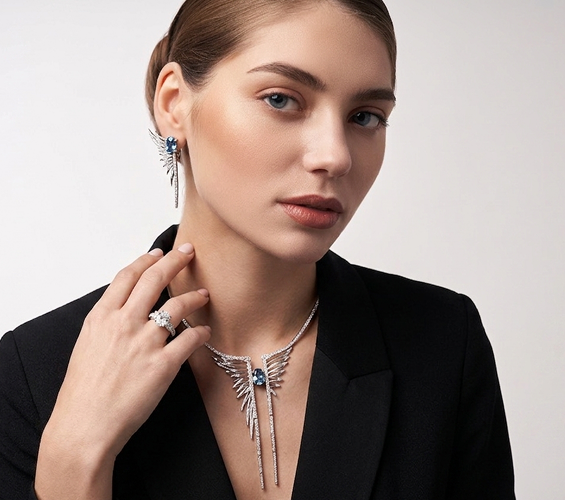
Explore Aurelia Royale Lab-Grown Diamond Earrings
Choose for the recipient's style, piercing and comfort — not just the specification.
Stay Connected
Get Our Latest Updates
Be first to discover new collections, exclusive events, and the quiet privileges reserved for our inner circle.